
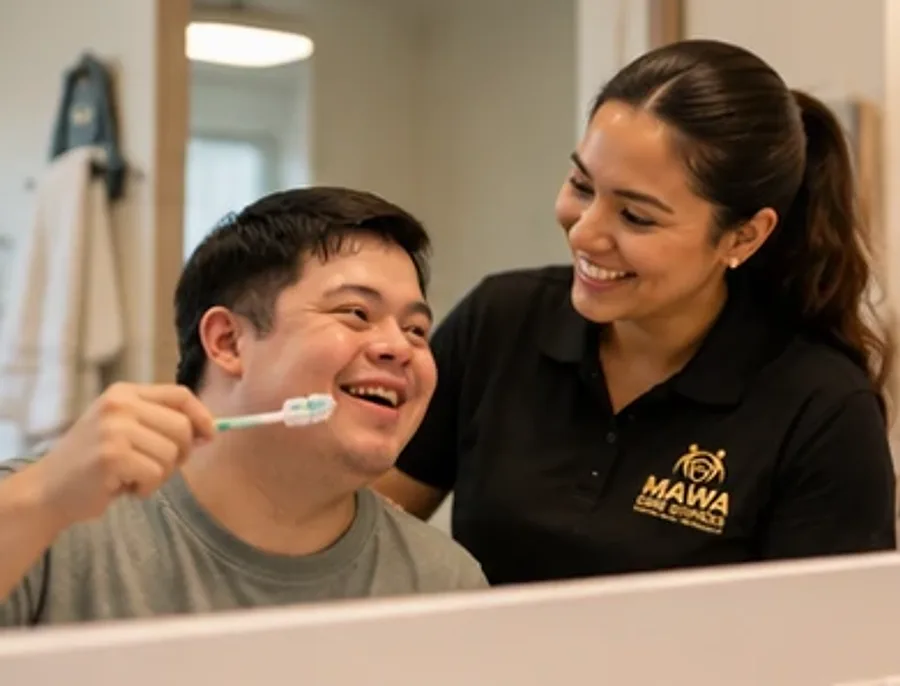
Ask ten people what a support worker does and you will get ten different answers — because good support work shapes itself around each participant. Still, a typical day shows what the role really involves.
A morning shift might start with personal care: assisting someone to shower, dress and have breakfast, with medication prompts along the way. Done well, this is not a task list — it is a routine built on trust, privacy and the participant's own pace and preferences.
The middle of the day is often about life beyond the front door: transport to an appointment, support at the shops, a skills session in the kitchen, or an activity in the community. The worker's job is to enable, not take over — doing things with a person, not for them.
Between and after shifts come the parts people don't see: progress notes, communication with families and coordinators, and flagging anything that needs attention early. Clear notes are how a team of workers delivers support that feels consistent.
The best support workers share a few traits: they are reliable, they listen more than they talk, they respect culture and routine, and they genuinely celebrate their participants' wins. Those are the qualities we look for at Mawa.
— The Mawa Care Services team
This article is general information, not advice about your individual plan. Examples are illustrative.
More from the journal
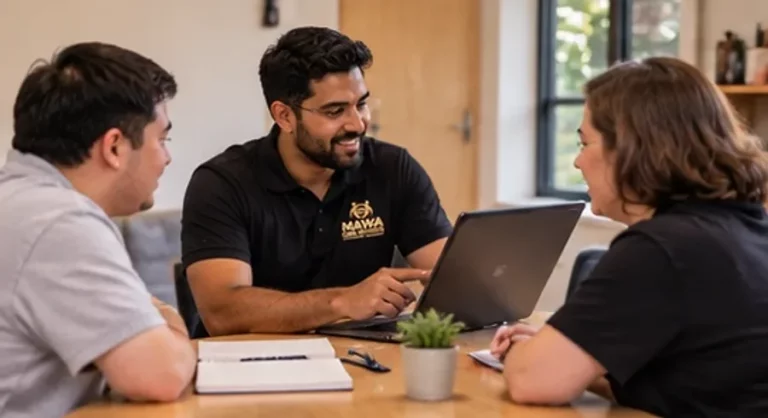
NDIS Explained ✦ 5 min read
Plan-managed, self-managed or NDIA-managed: what's the difference?
How your plan is managed decides which providers you can use and how much admin sits with you. Here's the plain-English version.
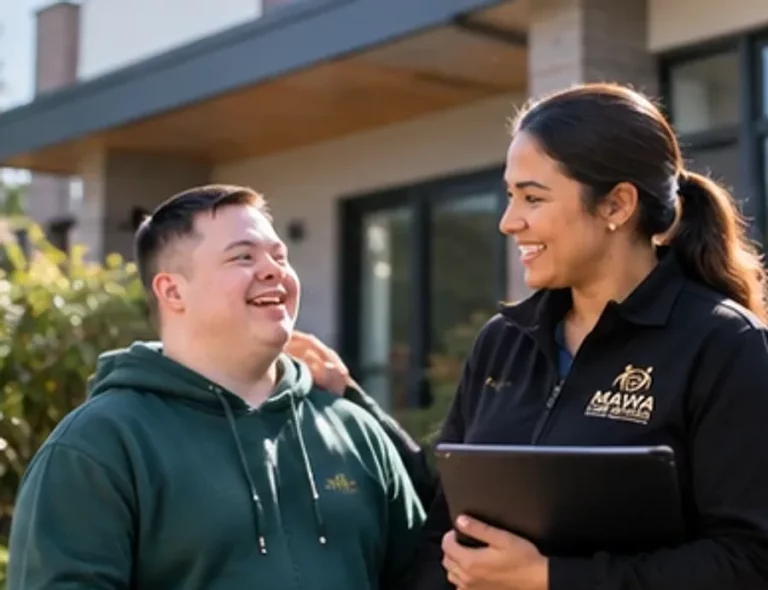
NDIS Explained ✦ 6 min read
How to prepare for your NDIS plan review (and get it right)
A plan review shapes your next year of support. A little preparation makes a big difference to the outcome.
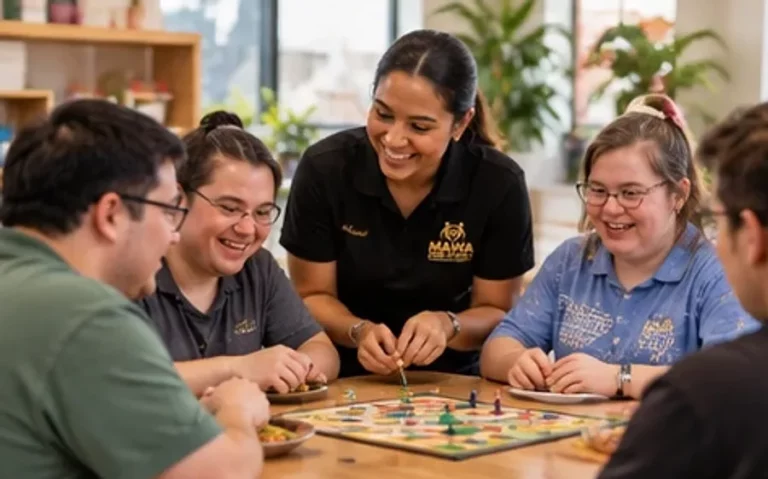
Provider Tips ✦ 5 min read
7 questions to ask before choosing an NDIS provider
The right provider should welcome hard questions. Here are seven that quickly reveal quality.
Ready to talk about support?
Tell us a little about your goals and we'll be in touch to talk through next steps.